What is The Sacrament of Matrimony?
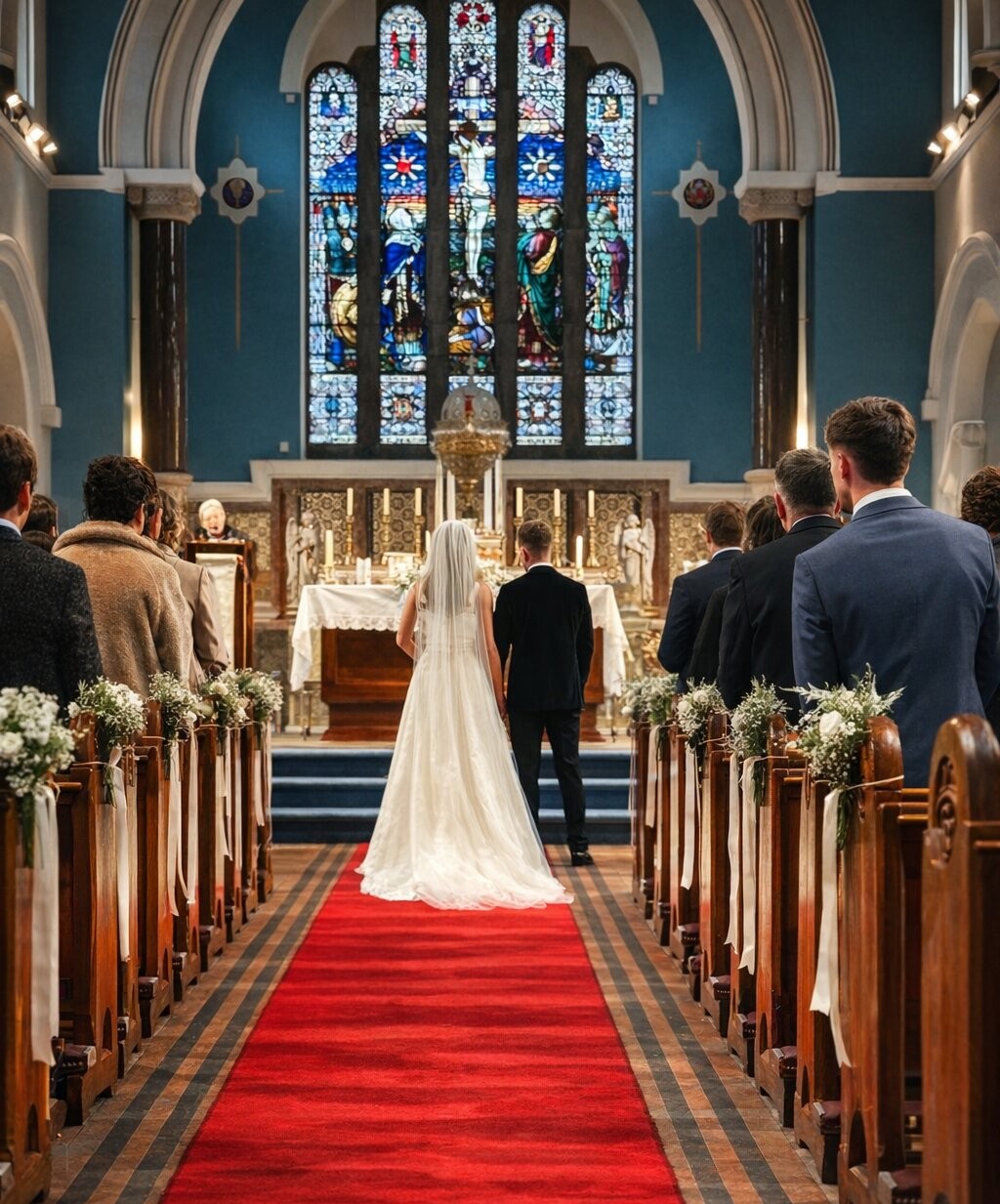
The sacrament of Matrimony celebrates a couple’s commitment to share the whole of their life together and to show the love of God to each other, to their children and to others through their relationship. Christian marriage is the place where husband and wife, children, family and friends meet God.
The Church rejoices in your decision to get married and offers its continued support to you as you journey together. The Church (the people of God) sees your marriage as a sign of God’s love among us. As ministers of the Sacrament of Marriage to each other, you choose to live your married lives within the community of the Church.
The Sacrament enriches your lives in a very special way but it also enriches the community in which you will live. You become witnesses for Marriage to all with whom you make contact. Your parents, family members, friends, colleagues and neighbours celebrate your entry into Marriage and by their attendance at your wedding ceremony offer their continued support to you for your future.
Your decision to get married is a sign of your love and of your desire to be together as husband and wife. ACCORD in helping you to prepare for your Marriage is privileged to be part of your journey and offers you its continued support throughout your married life.
Congratulations on your decision to get married It’s an exciting time with lots of planning ahead
There are certain requirements that need to be fulfilled if you wish to get married in a Church:
Set the Date and call the Parish Office (046 97 33311 ) to make sure that date is free.
- Make a Date with the local Parish Priest to fill out your Marriage Papers. (These are additional to the Green Folder that you get from the HSE
- All couples are Required to do a Pre Marriage Course. There are various Course available for eg. accord.ie
- If you are from outside the Parish you need to get your Baptism Certificate and your Confirmation Certificate.
- If you are from overseas or are not known in the Parish you may need a Letter of Freedom from your Previous Parish at home to say that you are free to Marry.
- You will then need to make an appointment to meet with the civil registrar in person to give notice of your intention to marry. This meeting must take place at least 3 months before the wedding. (The nearest civil registrar is based in HSE Health Centre Arden Road, Tullamore 057 9359534 / 057 9315959). The couple is required to bring the following documentation to the registrar’s office
- When all civil requirements have been completed satisfactorily the couple will receive, from the registrar, a Marriage Registration Form (MRF). Without the Marriage Registration Form the couple cannot get married nor may the priest proceed with the marriage..
I hope these guidelines will be of some guidance in helping you having a wonderful and memorable day.
Couples should contact the parish priest or parish office as early as possible. The Church asks couples to begin preparation at least three months before the proposed wedding date, though starting earlier is strongly recommended.
The following documents are normally required:
- A recent Baptism Certificate (issued within the last six months)
- Confirmation Certificate
- Letters of Freedom from the parish where you live
- The Marriage Registration Form (MRF) issued by the Civil Registrar
The priest will assist the couple in completing the Pre-Nuptial Enquiry, the official Church document required before the wedding.
The Pre-Nuptial Enquiry is the official document completed with the priest before the wedding. It confirms that both parties are free to marry and understand the commitment of Christian marriage.
Yes. In Ireland couples must notify the Civil Registrar at least three months before the wedding. The Registrar will then issue the Marriage Registration Form (MRF), which must be given to the priest before the wedding ceremony.
Couples are strongly encouraged to participate in a marriage preparation course, usually organised by ACCORD – the Catholic Marriage Care Service. These courses help couples reflect on communication, commitment, faith and the responsibilities of married life.
More information can be found at:
www.accord.ie
Yes. A Catholic may marry a person from another Christian tradition or another faith. This is known as a mixed marriage, and certain permissions from the Church are required. Couples should speak with the parish priest early in the preparation process.
If either person has been previously married, it is important to speak with the priest as soon as possible. In some cases an annulment may be required before a new marriage can take place in the Catholic Church.
Yes. As the ministers of the sacrament, couples are encouraged to be involved in planning the ceremony. The priest will help guide the couple in choosing appropriate readings, prayers and music for the wedding liturgy.
A Catholic wedding normally takes place in a church, usually in the parish of one of the couple. However, it may be celebrated in another church with the permission of the parish priest.
In our diocese, weddings are generally not celebrated on Sundays or major feast days, including:
- Ash Wednesday
- St Patrick’s Day (17 March)
- The Easter Triduum
- Holy Thursday
- Good Friday
- Holy Saturday
- The Assumption of the Blessed Virgin Mary (15 August)
- All Saints’ Day (1 November)
- The Immaculate Conception (8 December)
- Christmas Day (25 December)
Couples are encouraged to speak with the parish priest when choosing their wedding date.